Plant Info
| Name |
Microsorum pteropus (Java Fern)
|
| Structure | Rhizome |
| Difficulty | Easy |
| Light Demand | Low Light |
| CO2 | CO2 Optional |
| Growth Rate | Slow Growth |
| Placement |
Background, Epiphytic
|
| Height (in) | 4-6+ |
| Color | Green |

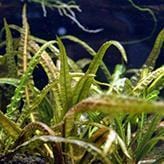
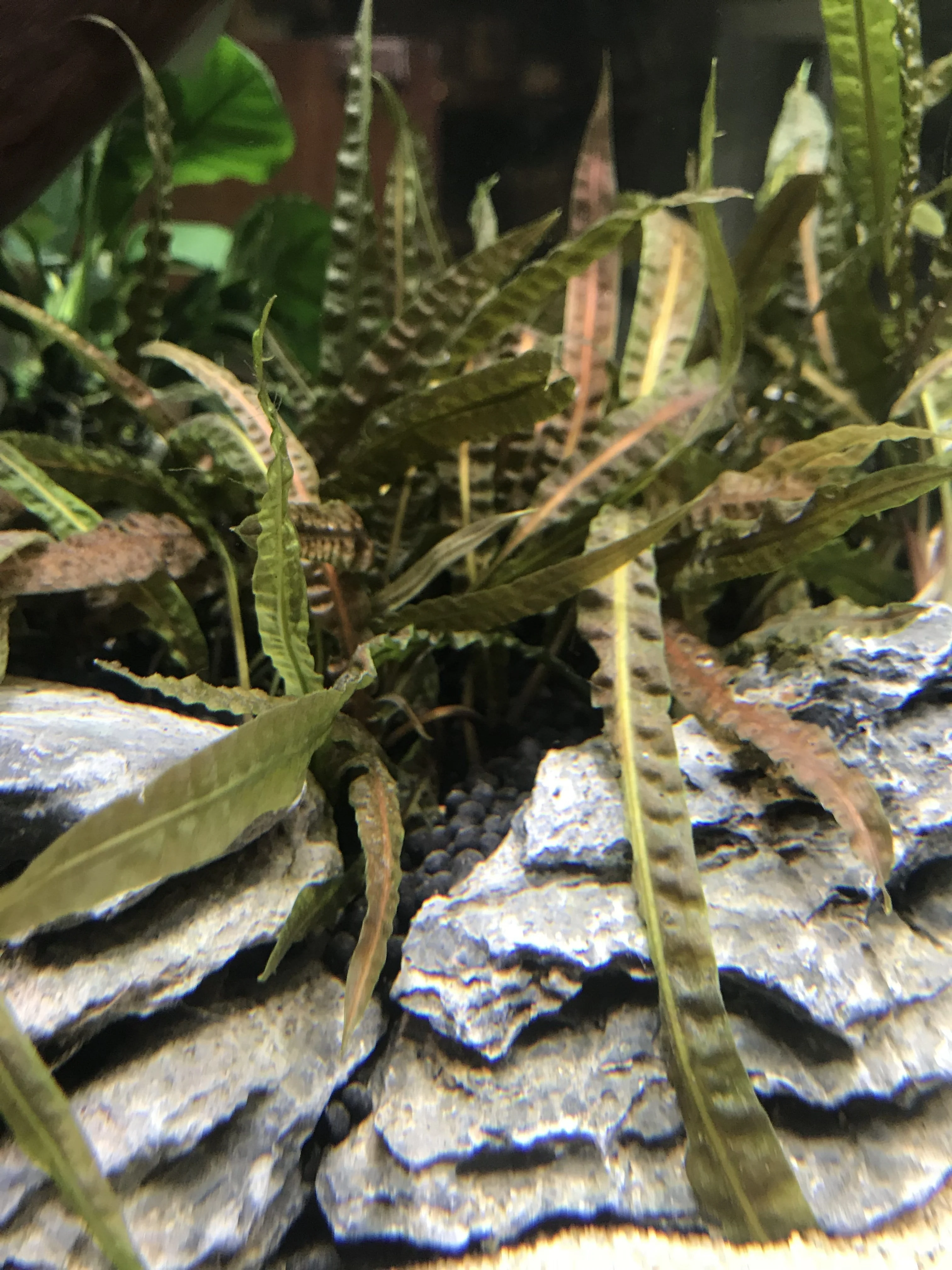
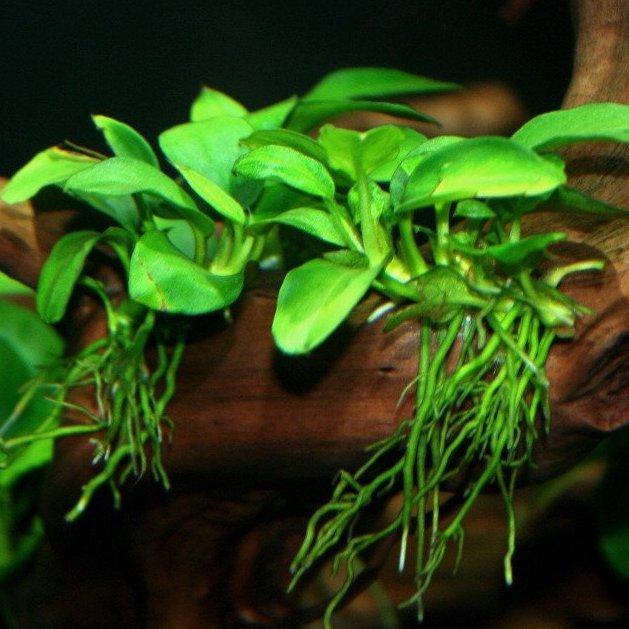
The Java fern is the most popular type of fern for aquatics, and is widespread in tropical Asia. This species varies widely and displays a number of different leaf shapes and sizes. Its undemanding nature makes it the perfect plant for beginners. It grows best when the rhizomes are anchored to rocks or driftwood. Low to medium lighting is completely sufficient, although it also grows well under strong lighting. Older leaves can sometimes produce plantlets that can easily be cut away and reattached in another place using a piece of thin fishing line.
| Name |
Microsorum pteropus (Java Fern)
|
| Structure | Rhizome |
| Difficulty | Easy |
| Light Demand | Low Light |
| CO2 | CO2 Optional |
| Growth Rate | Slow Growth |
| Placement |
Background, Epiphytic
|
| Height (in) | 4-6+ |
| Color | Green |
Loose cuttings are harvested from our aquariums at Aqua Lab. While we try our best to remove snails, we can't guarantee that these plants will be pest or disease-free. It's common for tiny snails or microscopic snail eggs to hitchhike on plants that come from an established aquarium. A single portion of cuttings can vary and depends on the species, but generally, it's about a handful. For stem plants, this is typically a bunch of several stems that are approx. 6"+ in length. If the stems do not have roots, simply plant them and roots will sprout in time. For crown plants like Crypts, it will be a single established plant with roots. For rhizome plants like Anubias, Java Fern, and Bucephelandra, a portion is usually one segment of rhizome with several leaves and roots coming off of it. Please keep in mind that plant and portion sizes can vary as our plants grow and propagate.
Original: $13.00
-65%$13.00
$4.55Product Information
Shipping & Returns
The Java fern is the most popular type of fern for aquatics, and is widespread in tropical Asia. This species varies widely and displays a number of different leaf shapes and sizes. Its undemanding nature makes it the perfect plant for beginners. It grows best when the rhizomes are anchored to rocks or driftwood. Low to medium lighting is completely sufficient, although it also grows well under strong lighting. Older leaves can sometimes produce plantlets that can easily be cut away and reattached in another place using a piece of thin fishing line.
| Name |
Microsorum pteropus (Java Fern)
|
| Structure | Rhizome |
| Difficulty | Easy |
| Light Demand | Low Light |
| CO2 | CO2 Optional |
| Growth Rate | Slow Growth |
| Placement |
Background, Epiphytic
|
| Height (in) | 4-6+ |
| Color | Green |
Loose cuttings are harvested from our aquariums at Aqua Lab. While we try our best to remove snails, we can't guarantee that these plants will be pest or disease-free. It's common for tiny snails or microscopic snail eggs to hitchhike on plants that come from an established aquarium. A single portion of cuttings can vary and depends on the species, but generally, it's about a handful. For stem plants, this is typically a bunch of several stems that are approx. 6"+ in length. If the stems do not have roots, simply plant them and roots will sprout in time. For crown plants like Crypts, it will be a single established plant with roots. For rhizome plants like Anubias, Java Fern, and Bucephelandra, a portion is usually one segment of rhizome with several leaves and roots coming off of it. Please keep in mind that plant and portion sizes can vary as our plants grow and propagate.
Original: $13.00
-65%$13.00
$4.55